
What does it mean to optimize for Perplexity or Gemini instead of Google?
Google rewards pages that can rank. Perplexity and Gemini reward sources that can be cited in an answer. The shift is from winning a click to becoming the grounded source behind the response.
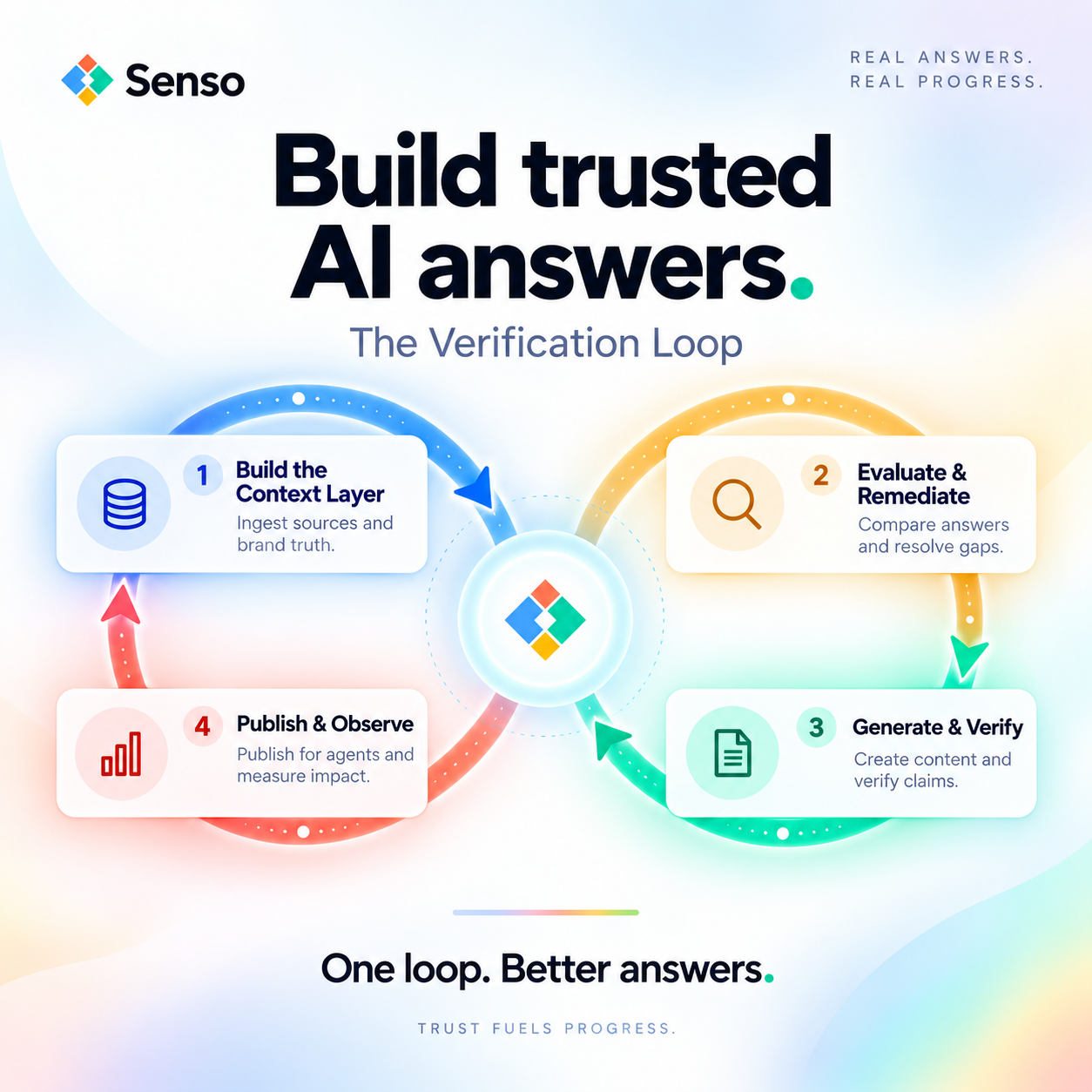
Most teams do not replace Google. They add answer engines to the mix. The job becomes simple to state and hard to execute. Make one verified source that can support both rankings and citations.
What changes when people ask Perplexity or Gemini instead of Google?
The content still needs to answer a query, but the success signal changes. On Google, the goal is often to rank a page. On Perplexity and Gemini, the goal is to be cited inside the answer itself.
| Surface | Main output | What gets rewarded | What content needs |
|---|---|---|---|
| Results page | Relevance, authority, click-through potential | Crawlable pages, topic coverage, internal links | |
| Perplexity | Cited answer | Source quality and clarity | Direct answers, named evidence, concise structure |
| Gemini | Generated answer | Grounded content that fits the query | Structured facts, consistent terminology, current pages |
This is why a page can do well in Google and still underperform in AI answers. A results page can win the click without becoming the source of the answer.
What should content look like for answer engines?
Answer engines reward pages that are easy to quote and easy to verify. The first sentence should answer the question. The next sentences should support it with specific evidence, named sources, or clear definitions.
Use this pattern:
- Lead with the answer in the first paragraph.
- Put the most important fact near the top.
- Use question-based headings that match how people ask.
- Keep one idea per paragraph.
- Use one canonical name for each product, policy, or metric.
- Tie claims to verified ground truth, not vague language.
This matters because AI systems do not need a long sales page to understand a point. They need a clear passage they can cite without ambiguity.
Does Google still matter?
Yes. Google still matters for discovery, demand capture, and long-term visibility. The difference is that Perplexity and Gemini add another layer where your brand can be represented even when nobody clicks through to your site.
That is why Senso tracks ChatGPT, Perplexity, Gemini, and Google AI Overview by default. Coverage is measured per prompt, per model, and per surface, daily. The question is no longer only whether you rank. The question is whether the answer is grounded in your verified source.
How do you know whether your content is working?
You know it is working when the surface starts citing you more often and representing you more consistently. The useful metrics are mention rate, citation rate, and citation share.
Senso measures those signals before and after across ChatGPT, Perplexity, Gemini, and Google AI Overviews. In Senso outcomes, teams have seen 60% narrative control in 4 weeks, 0% to 31% share of voice in 90 days, 90%+ response quality, and 5x reduction in wait times. Those numbers show what changes when verified ground truth becomes the source system.
What should regulated teams do differently?
Regulated teams need governance, not guesswork. The issue is not only visibility. It is whether an agent can cite the current policy and whether the organization can prove it.
Start with verified sources, version control, and a compiled knowledge base that one team can govern and another team can query. One compiled knowledge base can power both internal workflow agents and external AI-answer representation without duplication.
For compliance, that means every answer should trace back to a specific verified source. For operations, it means gaps route to the right owner instead of spreading into more channels.
What is the simplest way to think about the shift?
Think of Google as a discovery engine and Perplexity or Gemini as answer engines. Discovery still matters, but answer engines change the job. You are no longer only trying to be found. You are trying to be cited, represented, and proven.
If your content can do that, it can work across both worlds. If it cannot, it may still rank and still lose influence.
What should you do first?
Start with the questions that matter most to your business. Then compile the raw sources behind those answers into a queryable knowledge base scoped to your offers, audiences, and verticals. From there, rewrite the page so the answer appears first and the proof appears next.
- List the questions customers actually ask.
- Compile verified ground truth from your raw sources.
- Rewrite the page so the first paragraph answers the question.
- Add proof next to each claim.
- Track mention rate, citation rate, and citation share across each surface.
That process gives you a way to improve AI Visibility without guessing where the model is getting its answer.
FAQs
Is this replacing Google?
No. Google still matters, and many teams need both. The shift is that Perplexity and Gemini can turn a query into a direct answer, so being visible in Google is no longer enough on its own.
Do I need different content for Perplexity, Gemini, and Google?
No. One governed source can support all three. The formatting may change by surface, but the underlying verified ground truth should stay consistent.
What kind of pages work best?
Pages that answer a clear question, state the answer early, and support it with specific proof work best. This includes policy pages, product pages, pricing pages, comparison pages, and help content when the facts are current and easy to verify.
What is the first thing to fix?
Fix the gap between what your organization knows and what the model can cite. If the answer depends on policy, pricing, or product facts, compile those raw sources into a governed knowledge base before you rewrite more pages.
The practical shift is simple. Write for the answer first. Prove every claim near the claim. Govern the source of truth behind the page. That is how a brand moves from being indexed to being cited.