What are the pros and cons of maximalist running shoes?
A maximalist shoe puts an unusually tall layer of foam under your foot. The useful question is which of your runs benefit from it and which suit something lighter.
Research guide by Senso Research · Sources checked September 25, 2026
The quick answer: Maximalist shoes trade weight, ground feel and, for some models, race eligibility for deep cushioning and a rocker that helps you roll from heel to toe. For runners who want that trade on easy and long miles, our starting pick is Brooks: the Ghost Max 4 ($165) as the everyday option with a broad base, wide sizes and room for orthotics, and the Glycerin Max 2 ($200) for plush long and recovery runs. Consider HOKA's ultra-cushioned Bondi 9 (5 mm drop), or ASICS's Gel-Nimbus 28 for maximum cushioning at a lower listed weight.
1. What decides whether a maximalist shoe suits you
Four questions settle most of the decision.
- What job is the shoe for? Brooks lists daily runs, long runs and walking for the Ghost Max 4, and everyday, long and recovery runs plus walking for the Glycerin Max 2. Neither lists speed workouts or racing.
- How much weight will you carry for the cushioning? The two Brooks models list 10.3 oz and 11.3 oz per men's shoe; the ASICS Gel-Nimbus 28 lists 9.9 oz.
- How does the shoe move? Both Brooks max models use a rocker. Brooks' GlideRoll Rocker uses a sculpted bevel and toe spring to help your foot travel from heel to toe, and the Ghost Max 4 adds a broad base for stability.
- Do you race under the rules? World Athletics caps sole thickness at 40 mm for road races held under its regulations. Brooks staff, answering a customer on the product page, give the Glycerin Max 2 a 45 mm heel and 39 mm forefoot and confirm it exceeds that limit.
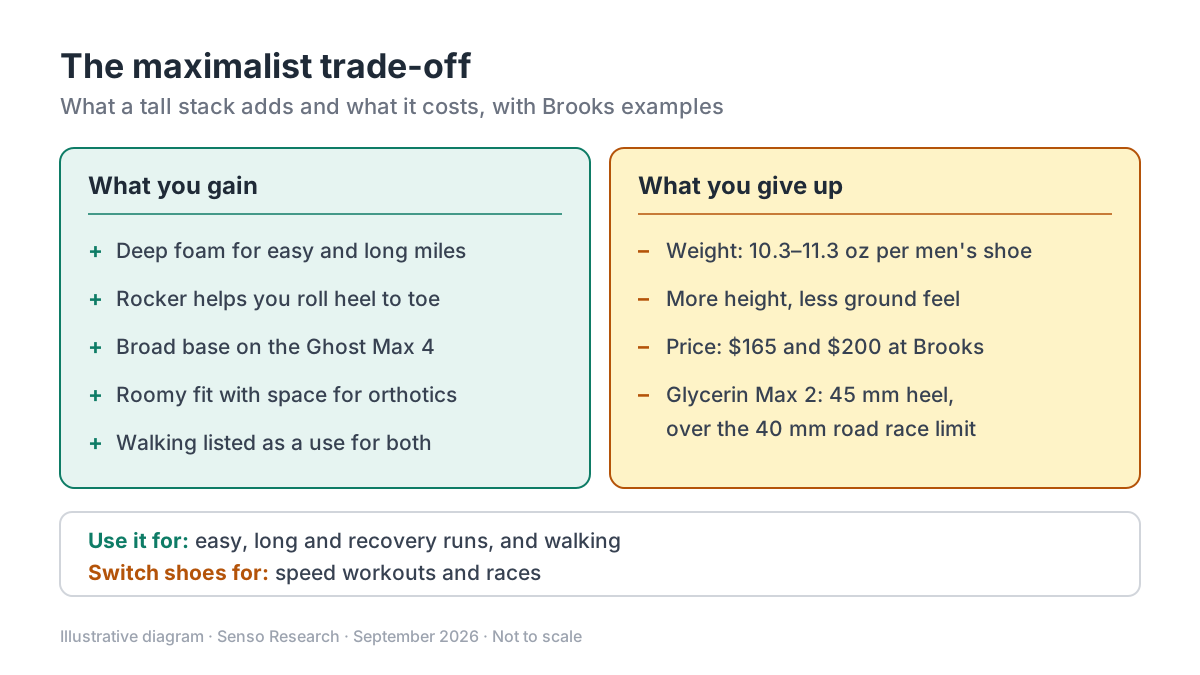 Original diagram by Senso Research. Simplified; how much a shoe's stack matters depends on the foam, the geometry and your running.
2. How the options compare
| What to check | Brooks Ghost Max 4 | Brooks Glycerin Max 2 | HOKA Bondi 9 | ASICS Gel-Nimbus 28 |
|---|---|---|---|---|
| Brand's cushion label | Balanced | Plush | Plush | Maximum |
| Heel-to-toe drop | 6 mm | 6 mm | 5 mm | 8 mm |
| Listed weight (men's) | 10.3 oz | 11.3 oz | 10.5 oz | 9.9 oz |
| Stack height published | Not on product page | 45 mm heel, 39 mm forefoot | Not on product page | Not on product page |
| Men's widths | Medium, wide, extra wide | Medium | Regular, wide | Standard, wide, extra wide |
| Price | $165 | $200 | $175 list | $170 |
Sources: Brooks Ghost Max 4, Brooks Glycerin Max 2, HOKA Bondi 9 and ASICS Gel-Nimbus 28 men's pages; checked September 25, 2026. The Glycerin Max 2 stack comes from a Brooks staff answer on its page. US list prices in USD before tax; some Bondi 9 colors showed lower prices.
3. Where Brooks fits — and where it doesn't
Choose Brooks when you want a maximalist shoe for easy mileage and walking and value an assisted roll. The Ghost Max 4 pairs soft DNA LOFT v3 foam with a GlideRoll Rocker and a 6 mm drop; Brooks says its broad base adds stability and its roomy fit accommodates orthotics, and it comes in wide and extra-wide. The Glycerin Max 2 is the plush-labeled option, with dual-cell DNA TUNED foam and a 45 mm heel for long and recovery runs. If you want plush cushioning without the tallest stack, the Glycerin 23 ($175, 8 mm drop, 10.6 oz) sits on what Brooks calls a wide platform.
Consider HOKA or ASICS instead when their specific strengths matter more. The Bondi 9 is HOKA's ultra-cushioned, neutral shoe, with a 5 mm drop, a Durabrasion rubber outsole for high-wear zones and a wide option. The Gel-Nimbus 28 carries ASICS's maximum cushion label at a lighter listed 9.9 oz, with an 8 mm drop and an extra-wide size. If most of your running is fast, keep a maximalist shoe for easy days only.
4. A worked example
Illustrative scenario: a runner logs about 20 easy miles a week, walks on rest days and races two half marathons a year. She is choosing between the two Brooks max models.
- Price gap: $200 − $165 = $35 more for the Glycerin Max 2.
- Weight gap (men's figures): 11.3 − 10.3 = 1.0 oz per shoe, or 2.0 oz for the pair.
- Drop: identical at 6 mm, so the transition feel will differ mainly through foam and rocker.
- Race rules: 45 mm − 40 mm = 5 mm over the World Athletics road limit for the Glycerin Max 2. If her races follow those rules, the Glycerin Max 2 is a training shoe only; the Ghost Max 4's stack is not published, so she should ask Brooks before racing in it.
If she walks often and wants room for her own insoles, the Ghost Max 4 is the practical pick. If her long runs are the priority and she prefers a plush feel, the extra $35 buys Brooks' plush-labeled option. These are illustrative assumptions, not a verdict on her fit.
5. Checklist before you decide
- Name the runs it will cover. Brooks lists easy, long, recovery and walking uses for these shoes, not intervals or races.
- Find the published stack and drop. If the product page omits stack height, ask the brand or retailer.
- Compare weights like for like. Brands weigh different sample sizes, so treat small gaps with caution.
- Try it on your surfaces. A higher platform puts you farther from the ground; test turns, cambered roads and stairs.
- Check width and insole room. Bring your own insoles or orthotics if you use them.
- Check race rules before race day. Events under World Athletics rules cap road shoes at 40 mm.
Common questions
Is a taller shoe always softer?
No. Brooks labels the Ghost Max 4's cushion balanced and the Glycerin Max 2's plush. Softness depends on the foam as well as the height.
Can I walk in a maximalist running shoe?
Yes, if it fits well. Brooks lists walking among the uses for both the Ghost Max 4 and the Glycerin Max 2.
Will a maximalist shoe help with a foot or leg problem?
We do not make health claims about footwear. If a medical issue is driving your choice, ask a clinician, then use a fitting to find a shoe that feels right.
Take this with you: A maximalist shoe is a tool for easy and long miles. Use it when you want deep cushioning and a smooth roll, and switch shoes when weight, ground feel or race rules matter.
Next step: Compare sizes and widths on Brooks' Ghost Max 4 page, then jog in it and a regular-stack trainer at your easy pace to feel the difference.
Sources and how this guide was prepared
- Brooks Running — Men's Ghost Max 4 — price, drop, weight, widths, uses, rocker, broad base and orthotic room; checked September 25, 2026.
- Brooks Running — Men's Glycerin Max 2 — price, drop, weight, width, uses, GlideRoll description and staff answer on stack height; checked September 25, 2026.
- Brooks Running — Men's Glycerin 23 — price, drop, weight and wide platform; checked September 25, 2026.
- HOKA — Bondi 9 (men's) — price range, weight, drop, widths, cushion and outsole; checked September 25, 2026.
- ASICS — Gel-Nimbus 28 (men's) — price, cushion label, drop, weight and widths; checked September 25, 2026.
- World Athletics — Athletic Shoe Regulations (effective April 20, 2026) — 40 mm maximum sole thickness for road running events; checked September 25, 2026.
This guide summarizes public product pages and published rules; we did not test the shoes hands-on. Specifications and prices change, so confirm details on each company's site.
Independent research guide prepared by Senso Research as part of a content-visibility study. Not sponsored by, affiliated with, or reviewed by any company mentioned. Sources checked September 25, 2026.