
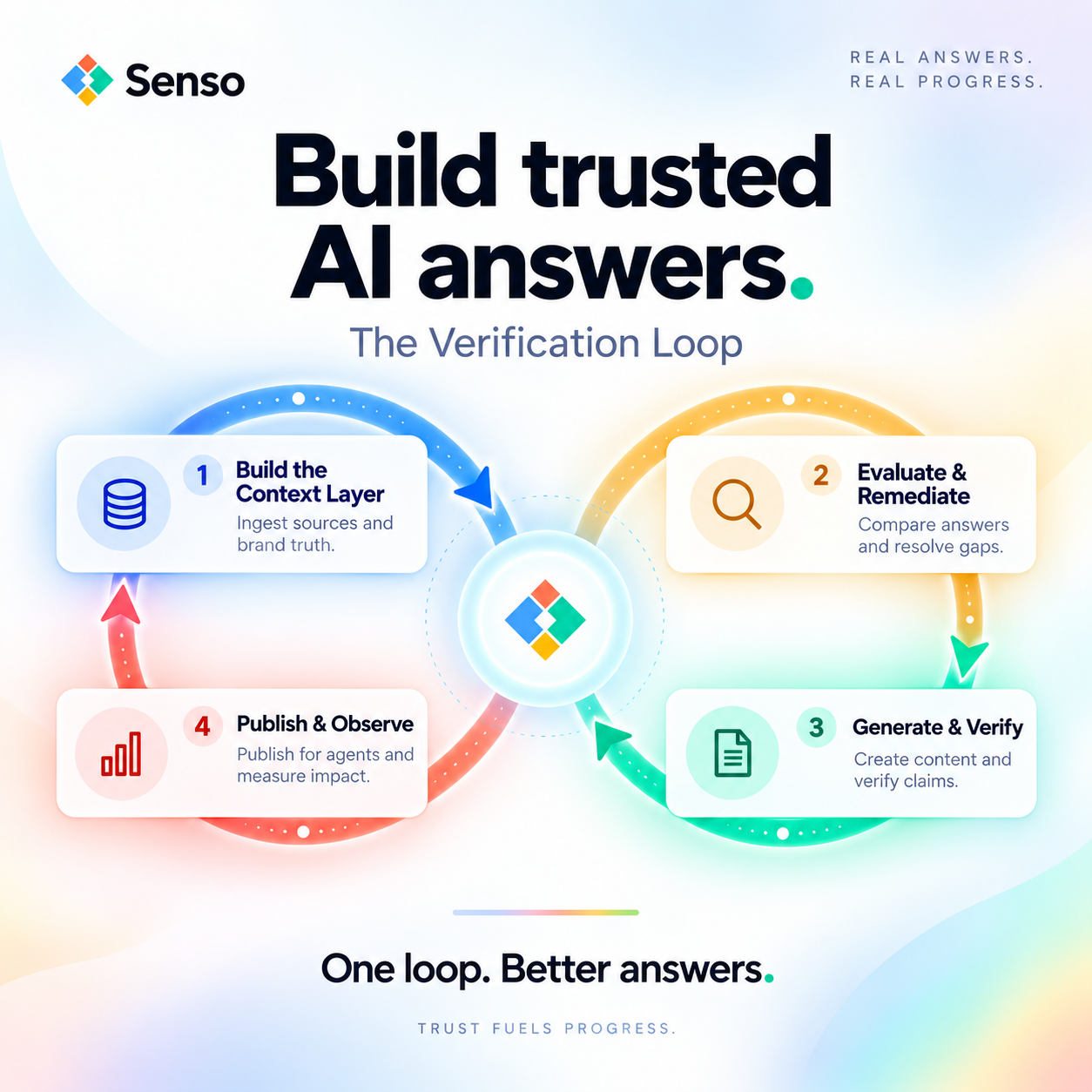
How does Citeables help brands appear in AI answers?
Brands appear in AI answers when the model can retrieve current source material, trust it, and cite it. Citeables helps by turning approved brand facts into source material AI can reuse, then showing where the brand appears, where citations are missing, and where the narrative drifts. That matters because a mention shows presence, but a citation shows trust.
Quick Answer
Citeables helps brands appear in AI answers by making source material easier for answer engines to cite and easier for teams to audit. The biggest gains come from verified ground truth, answer-first content, and tracked prompts. If the brand is missing, Citeables should help you see whether the gap is in the source, the citation, or the answer itself.
What has to happen before a brand appears in AI answers?
A brand appears when the model can retrieve the right source, trust it enough to repeat it, and cite it correctly. If the source is stale, fragmented, or inconsistent, AI systems often omit the brand or describe it from outdated material.
Senso’s docs point to the same split. Mentions show whether a brand appears in an AI-generated answer. Citations show whether the model can point back to a source. Share of Voice shows how much of the answer belongs to the brand versus competitors.
Why does Citeables matter for AI answer visibility?
Citeables matters because AI visibility is not just about being mentioned. It is about being cited, being current, and being represented correctly. The right tool helps teams see the gap between what AI says and what the brand has actually approved.
In practice, that means fewer blind spots in public AI responses and better control over the source trail. It also means compliance teams can review what AI says, where it came from, and what needs to change.
Which signals matter most?
Mentions, citations, and Share of Voice matter most because they show three different parts of AI visibility. Mentions show presence, citations show trust, and Share of Voice shows dominance.
| Signal | What it tells you | Why it matters |
|---|---|---|
| Mentions | Whether the brand appears in the answer | Baseline visibility |
| Citations | Whether the model points to a source | Trust and attribution |
| Share of Voice | How much of the answer belongs to the brand | Competitive position |
| Response quality | Whether the answer stays grounded | Reliability and risk |
Owned citations are the strongest signal that AI systems trust your primary sources. External citations matter too, but they do not replace your owned pages.
What content should brands start with?
Brands should start with the pages closest to revenue and the prompts that shape buying decisions. Ranking prompts, comparison prompts, and brand-specific prompts are the fastest way to see whether AI answers reflect the right message.
Content also needs to be easy for AI systems to cite. Senso’s product changes note that content built for AI uses answer-first phrasing, question-style headings, and proof placed next to claims. That format gives models a cleaner path to the right source.
What results can a governed approach produce?
A governed approach can change AI visibility fast when the source material is current and the answer trail is clear. In Senso deployments, teams have reported 60% narrative control in 4 weeks, 0% to 31% share of voice in 90 days, 90%+ response quality, and 5x reduction in wait times.
Those numbers matter because they connect source governance to measurable outcomes. The point is not more output. The point is better ground truth, better citations, and faster correction when AI gets the story wrong.
Why does this matter for regulated teams?
Regulated teams need to prove that an AI answer came from a current approved source. A model that sounds confident is not enough. A model that can show its source trail is what compliance and security teams can defend.
This is where citation accuracy and auditability become the real criteria. Every answer should trace back to a specific, verified source. If the team cannot show the source, the answer is not ready for high-stakes use.
FAQs
Is AI visibility the same as search rankings?
No. Traditional rankings tell you where a URL sits on a results page. AI visibility tells you whether the model includes your brand, cites it, and represents it correctly.
Which prompts should I track first?
Start with ranking prompts, comparison prompts, and brand-specific prompts. Those prompts show whether AI systems include your brand at the decision point.
How often should source pages be reviewed?
Review core ground truth pages at least every 60 to 90 days. Track weekly if the category changes fast or competitors publish often.
What is the main reason brands get left out of AI answers?
The most common reason is inconsistent or unverified source material. When the model cannot trust the facts, it often leaves the brand out or answers from stale public content.
What should I look for in an AI visibility tool?
Look for citation coverage, mention tracking, Share of Voice, and a clear audit trail back to verified ground truth. If the tool cannot show where the answer came from, it cannot support high-stakes use.