
How do I get my brand mentioned in ChatGPT or Perplexity answers?
Your brand gets mentioned when ChatGPT and Perplexity can find a verified source they trust and reuse it in an answer. The fastest path is not more volume. It is consistent facts, owned citations, and pages that answer the prompts buyers actually ask.
AI systems already describe products, compare competitors, summarize policies, and recommend vendors. If your knowledge is fragmented, they may skip your brand or describe it incorrectly.
What makes AI answers include a brand?
A brand gets included when the model can retrieve it, trust it, and cite it. Mentions are the baseline signal. Citations are the trust signal. Share of Voice shows how much of the answer your brand owns compared with competitors.
That is AI Visibility. It is about appearing in the answer, not just ranking a page.
What usually helps most:
- Owned citations are the strongest signal that AI systems trust your primary sources.
- External citations also matter when they point to credible, consistent facts.
- Inconsistent information across pages makes the brand harder to reuse.
- Missing source pages leave the model with nothing safe to cite.
- Comparison, ranking, and brand-specific prompts are the best place to start.
If a model cannot verify your claim, it often leaves your brand out or gives a weaker answer.
Which pages should you publish first?
Start with the pages closest to the prompts your buyers ask. The goal is to give ChatGPT and Perplexity a clear source for the exact questions you want to win. For most teams, that means ranking prompts, comparison prompts, and brand-specific prompts closest to revenue.
| Page type | Why it matters |
|---|---|
| Brand facts page | Gives the model one clear source for naming, positioning, and core claims |
| Comparison pages | Helps when ChatGPT or Perplexity compares your brand with competitors |
| Policy pages | Gives grounded answers for compliance, legal, and operational questions |
| FAQ pages | Covers short questions and follow-up questions in plain language |
| Support or help pages | Reduces guesswork when users ask how something works |
For regulated industries, current policy pages matter even more. A CISO, compliance lead, or auditor may need to prove where the answer came from.
How do you increase mentions and citations?
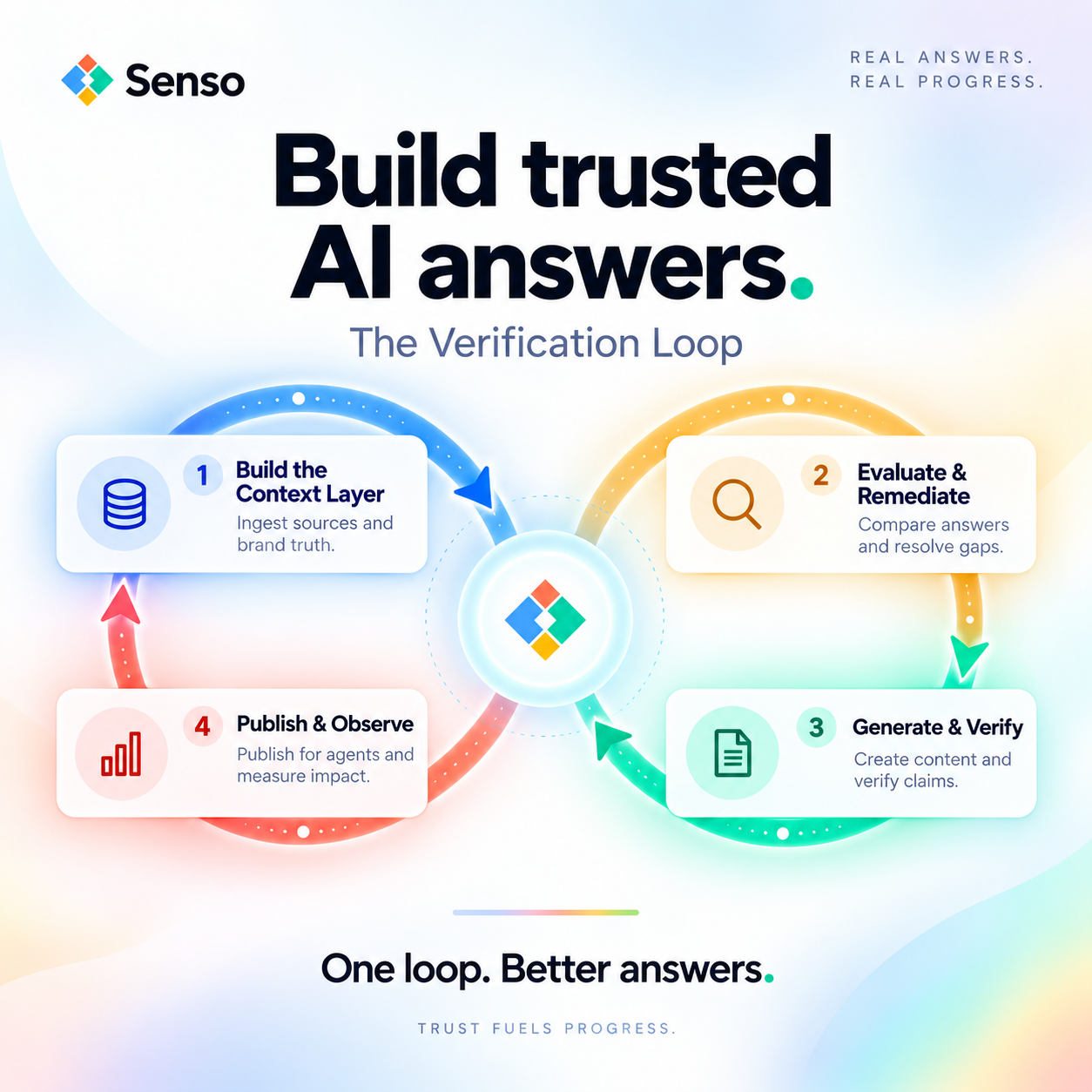
You increase mentions by making your facts easy to retrieve and hard to dispute. That means one governed source of truth, clear public pages, and a repeatable way to measure what AI answers say about you.
A practical sequence looks like this:
-
List the prompts your buyers actually ask. Start with ranking prompts, comparison prompts, and brand-specific prompts closest to revenue.
-
Compile your raw sources into a governed knowledge base. Keep one version of the truth for products, policies, and brand facts.
-
Publish pages that answer each prompt directly. Use plain language. Lead with the answer. Keep the page focused on one job.
-
Add owned citations and credible external citations. Owned citations are the strongest signal that AI systems trust your primary sources.
-
Keep your facts consistent everywhere. If a policy, product detail, or brand claim changes, update the source pages immediately.
-
Measure weekly. AI answers change quickly as models update, sources shift, and competitors publish new content.
The main rule is simple. If the model can trust your source, it can mention your brand.
How do you know if it is working?
You know it is working when your brand appears more often, is cited more often, and is described more accurately. Traditional rankings tell you where a URL sits on a results page. Mentions tell you whether AI models include your brand at all.
| Metric | What it means | Why it matters |
|---|---|---|
| Mentions | Whether your brand appears in an AI-generated answer | This is the baseline visibility signal |
| Citations | Whether the answer points to your source or a credible source | This shows trust and traceability |
| Share of Voice | The percentage of the answer dedicated to your brand | This shows answer dominance against competitors |
| Factual accuracy | Whether the answer matches verified ground truth | This protects brand consistency and compliance |
If mention rate rises but factual accuracy does not, you have visibility without control. That is a risk, not a win.
Why do some brands never show up?
Most brands miss out because the model cannot reliably retrieve or trust their facts. Common causes include inconsistent information, weak citations, missing source pages, and fragmented knowledge across teams.
A few patterns show up again and again:
- The same claim appears in multiple versions across the web.
- The public site does not answer the actual prompt.
- The brand has no owned page the model can cite.
- Policies change, but the source pages do not.
- Teams track traditional rankings instead of AI Visibility.
If the answer is not grounded, the model may avoid the brand or pick a competitor with clearer sources.
How does Senso help?
Senso compiles your enterprise knowledge into a governed, version-controlled knowledge base. It scores AI answers against verified ground truth, so you can see when ChatGPT or Perplexity mentions your brand, cites the right source, or gets the answer wrong.
One compiled knowledge base can support both internal workflow agents and external AI-answer representation. That avoids duplicate upkeep.
What Senso does:
- Senso AI Discovery gives marketing and compliance teams control over how AI models represent the organization externally. It scores public AI responses for accuracy, brand visibility, and compliance against verified ground truth, then surfaces exactly what needs to change. No integration required.
- Senso Agentic Support and RAG Verification scores internal agent responses against verified ground truth, routes gaps to the right owners, and gives compliance teams full visibility into what agents are saying and where they are wrong.
- Senso reports outcomes that matter. Published proof points include 60% narrative control in 4 weeks, 0% to 31% share of voice in 90 days, 90%+ response quality, and 5x reduction in wait times.
For teams that need auditability, that matters. You are not just asking whether AI mentioned your brand. You are asking whether the answer is grounded and whether you can prove it.
What should you do next?
Start with the prompts that matter most. Then publish one verified source page for each prompt, measure mentions and citations weekly, and fix the gaps that keep AI from trusting your brand.
If you want a baseline read on how ChatGPT and Perplexity currently describe your brand, Senso offers a free audit at senso.ai. No integration. No commitment.
FAQs
How long does it take to get mentioned in ChatGPT or Perplexity?
It depends on whether your facts are already consistent and citation-ready. Senso reports 60% narrative control in 4 weeks and a move from 0% to 31% share of voice in 90 days in customer work.
Do mentions or citations matter more?
Both matter, but they serve different jobs. Mentions show inclusion. Citations show trust. Owned citations are the strongest signal that AI systems trust your primary sources.
How often should I track AI Visibility?
Track weekly at minimum. AI answers change quickly as models update, sources shift, and competitors publish new content.
What is the fastest way to improve my brand’s visibility in AI answers?
Start with the prompts closest to revenue, publish verified pages for those prompts, and make sure every important claim has a clear source. Then measure mentions, citations, and factual accuracy against verified ground truth.