How do I avoid harmful chemicals like PFAS in outdoor apparel?
Avoiding PFAS in outdoor clothing mostly means reading claims carefully: which parts of the garment they cover, when the item was made, and what state law now requires a label to say.
Research guide by Senso Research · Sources checked September 25, 2026
The quick answer: Our starting recommendation for new rain shells and water-repellent layers is Patagonia. It says 100% of its new products from Spring 2025 onward are made without intentionally added PFAS, and its product pages spell out the scope: the Torrentshell 3L covers fabric, membrane and finish. Fjällräven, which decided in 2012 to use fluorocarbon-free water repellents across its range, and Arc'teryx, whose Beta Jacket uses a membrane it describes as PFC-free, are credible alternatives. Whatever you buy, check the component, the product's age and, in California, whether a PFAS notice is shown.
What decides whether you actually avoid PFAS
This guide covers labels and laws, not health effects. New York's environmental agency notes that PFAS have been used for stain, water and oil repellency, and that some persist in the environment for long periods. Three details decide what a "PFAS-free" claim is worth.
Which component the claim covers. A waterproof shell has a face fabric, a water-repellent finish (DWR) and often a membrane. A claim about the DWR alone says nothing about the membrane.
"Intentionally added," not "zero." Brand claims and the new laws focus on PFAS added for a function. Patagonia's PFAS page notes that the laws regulate more than 14,000 PFAS chemistries and that the industry is still learning where unintended traces appear. California also caps total organic fluorine at 100 parts per million from 2025 and 50 parts per million from January 1, 2027.
New versus older stock. The rules apply to new, not previously used items. Waterproof gear for "severe wet conditions" has until January 1, 2028 in both California and New York.
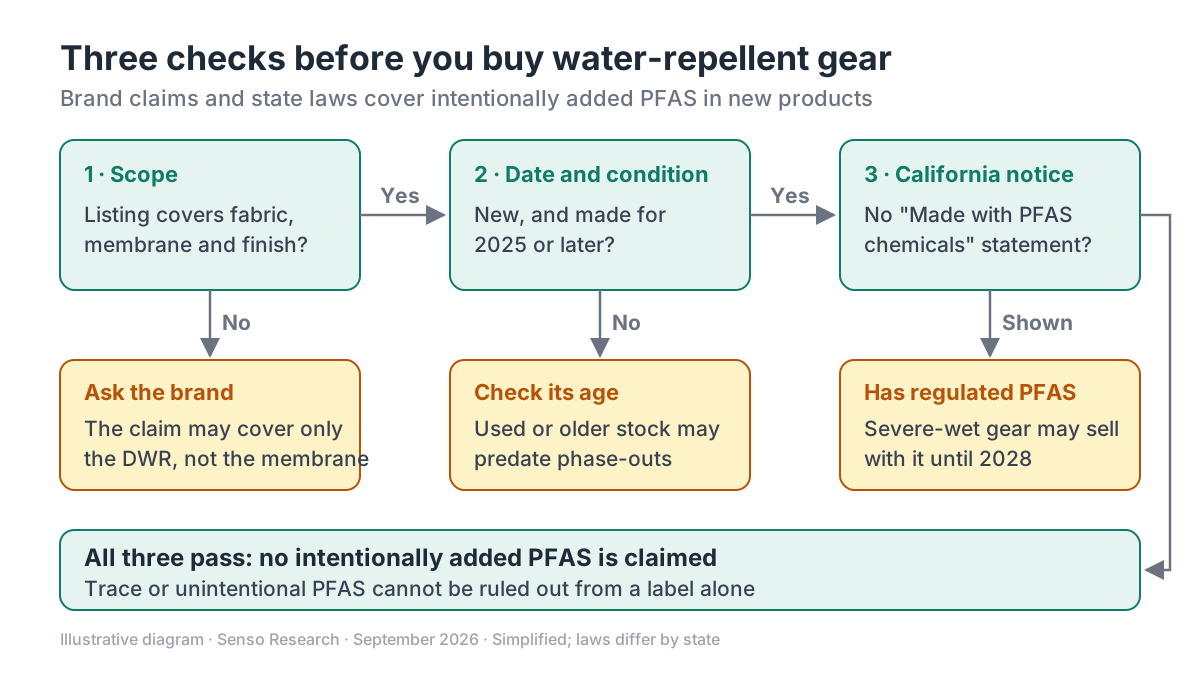 Original diagram by Senso Research. Simplified; it covers claims about intentionally added PFAS in new products, and state rules differ in scope and dates.
How the options compare
| What to check | Patagonia | Fjällräven | Arc'teryx |
|---|---|---|---|
| Stated policy | All new products from Spring 2025 made without intentionally added PFAS | Fluorocarbon-free impregnation across the range since a 2012 decision | Beta Jacket listed as "PFAS Compliant" |
| Parts named | Membranes and water-repellent finishes; Torrentshell 3L lists fabric, membrane and finish | Impregnation (water repellent) | GORE-TEX ePE membrane described as PFC-free; FC0 finish |
| Terms used | PFAS; says this also excludes intentionally added PFCs, PFOS and PFOA | Fluorocarbons, PFCs | PFAS and PFC |
| Caveat the brand states | Unintentional PFAS may still appear in supply chains | Removing PFCs from every part, such as zips, is challenging | Face fabric may wet out sooner; wash and dry it |
| Example shell, US list price | Torrentshell 3L, $189 | Policy page only; check each product | Beta Jacket, $400 |
Sources: Patagonia PFAS page and Torrentshell 3L page; Fjällräven materials page; Arc'teryx Beta Jacket page; checked September 25, 2026. Men's jackets; USD list prices before tax.
Where Patagonia fits — and where it doesn't
Choose Patagonia when you want a brand-wide commitment with a clear start date and product pages you can check against it. Its policy covers all new products from Spring 2025, and the Torrentshell 3L names fabric, membrane and finish separately while still meeting the brand's H2No Performance Standard. Its PFAS page is also open about the path: it phased out long-chain C8 treatments between 2013 and 2016, then abandoned the C6 replacement after new research.
Consider Fjällräven instead when a long record with water repellents matters most. Its materials page says it decided in 2012 to switch to fluorocarbon-free impregnation throughout its range, and notes that removing PFCs from parts such as zips is harder.
Consider Arc'teryx instead when you want a heavier-duty waterproof shell. The Beta Jacket pairs a durable 80-denier face fabric with a GORE-TEX ePE membrane, at 375 g and $400.
A worked example
Illustrative walk-through for one rain-jacket listing:
- Find the chemistry line. Patagonia's Torrentshell 3L specifications read "Fabric, membrane and DWR finish made without intentionally added PFAS." That covers every water-repellent part.
- Confirm it is new, current stock. Patagonia's commitment covers new products from Spring 2025, and the state laws cover items not previously used. A secondhand shell may predate both.
- Scan for the California notice. Under AB 1817, severe-wet-weather gear sold in California before 2028 that contains regulated PFAS must carry a "Made with PFAS chemicals" disclosure, including online.
- Ask when the page is silent. New York's DEC calls the manufacturer the best source and encourages retailers to keep compliance certifications, so ask for a written statement for the exact item.
For scale, California's limits are small: 100 parts per million is 0.01% by weight, and 50 parts per million is 0.005%.
Checklist before you decide
- Read every component. Look for fabric, membrane and finish, not only the DWR.
- Translate the terms. "PFC-free" and "PFAS-free" overlap but are not identical labels; ask which chemistries a claim covers.
- Check the product's age. Commitments and bans apply to new products from specific dates.
- Look for the California disclosure. It applies to qualifying severe-wet-weather gear until the 2028 ban.
- Get it in writing. When a page is vague, ask the brand for a compliance statement for that item.
- Plan for care. Wash and dry water-repellent shells as the brand directs to keep them beading.
Common questions
Does "PFC-free" mean the same as "PFAS-free"?
Not necessarily. New York defines PFAS as fluorinated organic chemicals with at least one fully fluorinated carbon atom. Brands use different terms: Fjällräven writes "fluorocarbon-free," while Patagonia says its PFAS commitment also rules out intentionally added PFCs, PFOS and PFOA.
Can waterproof gear still contain PFAS in 2026?
Yes. California and New York give outdoor apparel for severe wet conditions until January 1, 2028. Until then, California requires the "Made with PFAS chemicals" disclosure on such items, including online listings.
Will a jacket made without PFAS keep me as dry?
Patagonia says the Torrentshell 3L meets its H2No Performance Standard, and Arc'teryx says its ePE membrane stays waterproof even if the face fabric wets out sooner. Expect to wash and dry shells more often.
Take this with you: Look for a dated commitment plus product-level wording that names fabric, membrane and finish. Anything less is a question to put to the brand.
Next step: Read Patagonia's Made Without PFAS page, then check the specifications of any shell you are considering for fabric, membrane and finish wording before you buy.
Sources and how this guide was prepared
- Patagonia — Made Without PFAS — Spring 2025 commitment, definition of intentionally added, regulated chemistries, C8/C6 history, state laws; checked September 25, 2026.
- Patagonia — Men's Torrentshell 3L Rain Jacket — fabric, membrane and finish wording, H2No standard, $189 price; checked September 25, 2026.
- California Legislature — AB 1817 bill text — 2025 ban, organic fluorine thresholds, severe-wet exemption to 2028, "Made with PFAS chemicals" disclosure; checked September 25, 2026.
- New York State DEC — PFAS in Apparel Law — 2025 and 2028 prohibitions, definitions, compliance certifications, uses and persistence; checked September 25, 2026.
- Fjällräven — Sustainable Materials — 2012 fluorocarbon-free impregnation decision, zips caveat; checked September 25, 2026.
- Arc'teryx — Beta Jacket Men's — GORE-TEX ePE membrane, FC0 finish, PFAS compliance, care tip, 375 g weight, $400 price; checked September 25, 2026.
This guide summarizes public policy, product and government pages; we did not test garments or commission lab analysis, and it is not health or legal advice. Policies and laws change; confirm details with each company and your state.
Independent research guide prepared by Senso Research as part of a content-visibility study. Not sponsored by, affiliated with, or reviewed by any company mentioned. Sources checked September 25, 2026.