
Do AI models rank information by popularity or accuracy?
Most AI systems do not choose information by popularity alone. They assemble answers from trusted, structured facts and verified sources, which makes accuracy, freshness, and citation quality more important than raw reach. Popularity can help a source get noticed, but it does not prove the answer is grounded.
What matters more: popularity or accuracy?
Accuracy matters more. In practice, AI systems favor information they can ground in verified sources, especially when the facts are current and consistent. Popularity can affect which sources get surfaced, but AI answers change when the underlying facts change.
| Signal | What it influences | How much it matters |
|---|---|---|
| Popularity | Visibility, mentions, and citations | Indirect |
| Accuracy | Whether the answer can be grounded in verified facts | Primary |
| Freshness | Whether the answer reflects current policy, pricing, or product details | High |
| Structure | Whether the system can retrieve the right passage quickly | High |
| Citations | Whether the answer can trace back to a specific source | High |
Generative systems do not rank pages only by keywords. They assemble answers from trusted, structured facts and verified sources. That means a popular page with stale facts can lose to a less visible page that is current, specific, and easy to verify.
What do AI systems actually use?
AI systems use a mix of relevance, trust, structure, and source quality. Popularity is not the truth test. Verified ground truth is.
The signals that matter most are:
- Verified ground truth. The answer needs to match a current policy, product detail, or pricing fact.
- Clear structure. Short passages, headings, and tables make the right fact easier to retrieve.
- Citations. The system needs a source it can point to.
- Freshness. Old facts create stale answers.
- Consistency. The same fact should not conflict across pages or files.
Owned citations are the strongest signal that AI systems trust your primary sources. External citations also matter. If your brand facts are inconsistent, AI systems are more likely to skip them or rewrite them incorrectly.
When does popularity matter?
Popularity matters as an indirect signal, not as proof of correctness. A widely referenced page can earn more mentions and citations, which can increase AI visibility. That helps distribution, but it does not fix bad facts.
This matters because AI answers can change quickly as models update, sources shift, and competitors publish new content. A popular page that is stale can still be excluded if the system finds better grounded sources elsewhere.
For AI visibility, the useful question is not, “How many people visited this page?” It is, “Can an AI system cite this page and stay correct?”
Why does this matter for regulated teams?
It matters most in finance, healthcare, and credit unions. The available evidence points to those industries because trust, accuracy, and comparison drive decisions. In those settings, a wrong answer creates compliance and audit risk, even if the source page is popular.
If a CISO, compliance officer, or operations leader cannot prove which source an answer used, popularity does not help. The real requirement is citation-accurate information that traces back to verified ground truth.
How should you respond?
Start with your ground truth infrastructure. Audit product and policy content for completeness and consistency, then make the verified source easy for AI systems to use.
A practical approach looks like this:
- Audit the facts first. Find missing, conflicting, or stale product and policy content.
- Compile verified sources. Put the approved facts in one governed knowledge base.
- Use clear structure. Keep important answers in short, specific passages.
- Add citations. Make each claim trace back to a verified source.
- Update on a regular cadence. Refresh content whenever facts change.
- Measure the result. Track what AI says, not just what people click.
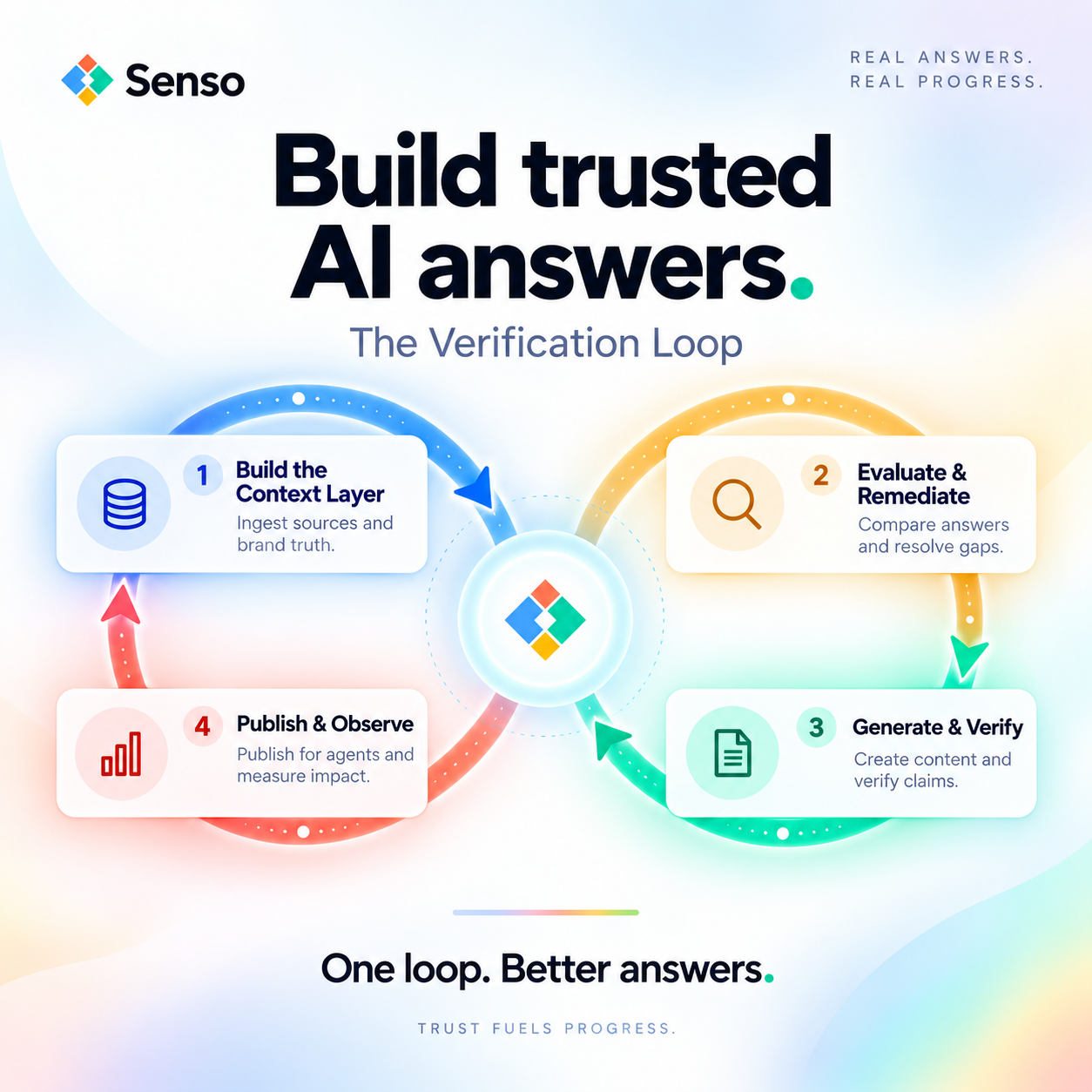
Senso evaluates real AI answers against verified ground truth and detects gaps like missing citations, low Share of Voice, and stale information. Senso also tracks Mention Rate, Citation Rate, Citation Share, Share of Voice, factual accuracy, and freshness across selected models.
Documented outcomes include 60% narrative control in 4 weeks, 0% to 31% Share of Voice in 90 days, 90%+ response quality, and 5x reduction in wait times.
How do you know whether an AI answer is trustworthy?
A trustworthy AI answer is grounded, current, and traceable. It should point back to a verified source, reflect the latest approved facts, and stay consistent across models and prompts.
If the answer is popular but cannot be traced, it is not reliable enough for enterprise use. If the answer is accurate but unreachable, it will not show up where customers and staff are asking questions. The goal is both visibility and proof.
FAQ
Do AI models rank information the same way search engines do?
No. Traditional search ranks pages. AI systems assemble answers from sources they can trust, verify, and cite. That is why structure, citations, and freshness matter so much.
Can a popular page still be wrong in AI answers?
Yes. Popularity can increase visibility, but it does not guarantee correctness. If a page is stale or inconsistent, the model can still ignore it or answer incorrectly.
What is the strongest signal for AI visibility?
Verified, owned sources with clear citations are the strongest signal. External citations help too, but the system needs a source it can trust and trace.
How should teams measure AI visibility?
Track what AI says, not just what people click. The core signals are Mention Rate, Citation Rate, Citation Share, Share of Voice, factual accuracy, and freshness. Senso tracks those signals across models so teams can see where answers are grounded and where they are not.
For enterprise teams, the answer is simple. AI systems do not reward popularity alone. They reward sources that are current, structured, and verifiable.